



Your Reliable Home Care for Disabled Adults in King of Prussia, PA
Most pages about home care are written to somebody’s daughter. This one is written to you, because a disability at forty is a different situation from a decline at eighty, and being talked about in the third person gets old quickly.
What people usually want at this point is narrow and specific. Stay in your own apartment. Keep the job. Get through the morning routine without it eating three hours. Have the hard parts handled by someone competent, and keep deciding everything else yourself.
That is what this service from Good Hands Home Care is for. Home care for disabled adults is arranged around you rather than around a facility schedule — and it exists so that a disability does not decide where you live.


Our Home Care Services for Disabled Adults Include
The support ranges from a couple of hours in the morning to continuous coverage, and it moves in either direction as circumstances change. Nothing about the arrangement assumes a particular age.
- Personal Care — bathing, dressing, grooming and hygiene, carried out the way you have established it.
- Transfers & Mobility — safe transfers between bed, chair and vehicle, repositioning, pressure relief, work with lifts, slide boards and other equipment.
- Meals & Medication — meal preparation adapted to your needs, help with eating, medication reminders.
- Household Support — housekeeping, laundry, errands, and tasks made difficult by reach or access.
- Life Outside the House — support around work, study, therapy and going out, with schedules built around your week.
Anything clinical stays outside this scope — wound care, injections and catheter changes fall under skilled nursing ordered by a physician, which often runs alongside daily support rather than replacing it.
You Direct the Care — We Make It Reliable
The care plan is written with you, and it records what you want done, when, and in what order. It also records what you would rather handle yourself, which is the part that usually gets skipped. You decide the time you get up. You decide whether the caregiver comes into the bathroom or waits outside the door. Where a family member is involved, we agree from the start how much they are in the loop — and that is your decision rather than theirs.
Good Hands Home Care has served Pennsylvania families for more than eight years and holds accreditation from the Accreditation Commission for Health Care, alongside membership in the Pennsylvania Homecare Association.
Who Benefits from This Support
- Adults with spinal cord injuries rebuilding or streamlining a daily routine.
- People with progressive conditions such as multiple sclerosis or ALS, whose plan has to move with them.
- Adults recovering from stroke or brain injury who need consistency and repetition.
- People with lifelong disabilities who know exactly how they want things done.
Every one of our 120-plus caregivers clears a rigorous screening process, including a criminal background investigation and a psychological evaluation. Caregivers are matched on temperament as much as on skills — and if the match is wrong, we replace the caregiver rather than asking you to adapt to them.

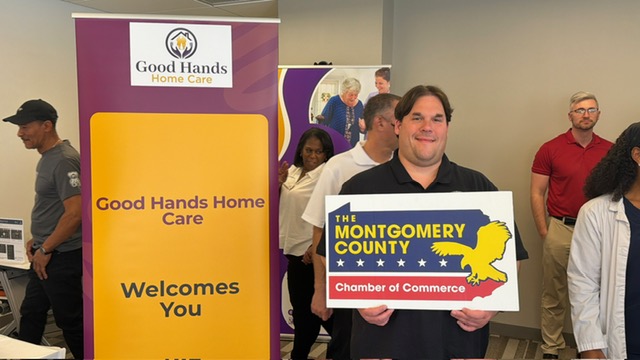
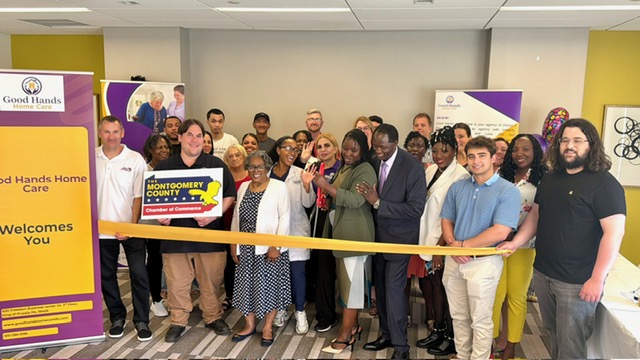
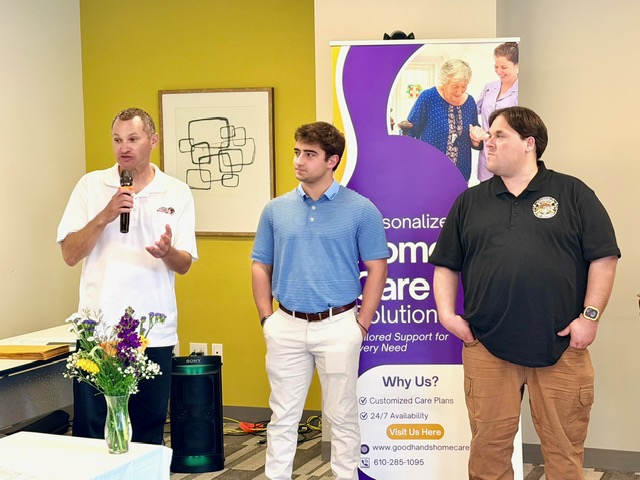
Meet Our Team
Get to know the dedicated people behind Good Hands Home Care. Our caregivers and staff bring compassion, professionalism, and genuine respect to everyone we serve.





Frequently Asked Questions (FAQ)
What is home care for disabled adults?
Home care for disabled adults is non-medical support provided in a person’s own home, covering personal care, mobility, meals, housekeeping and daily routine. It is arranged around the individual rather than around a facility schedule, and it ranges from a couple of hours a day to continuous coverage.
Is there an age limit for home care?
No. Home care is commonly associated with older adults, but the service is the same at any age. We work with adults of every age who need support with daily living, including people living with a disability since childhood and people adjusting after an injury or diagnosis.
Does Medicare pay for a caregiver at home?
Medicare does not pay for ongoing non-medical care at home. Its home health benefit covers intermittent skilled nursing and therapy visits ordered by a physician, which is a different service. Daily personal care and household support are funded another way.
Does Medicaid pay for home care for adults with disabilities in Pennsylvania?
Pennsylvania runs several programs that can fund in-home support, including Community HealthChoices for Medicaid-eligible adults aged 21 and over who meet a nursing facility level of care, and the OBRA Waiver for adults with physical disabilities. Act 150 exists for people whose income is too high to qualify for Medicaid. Eligibility is determined by the Commonwealth and the relevant plan.
Can I choose my own caregiver?
Caregivers are matched to the person rather than assigned by whoever is free, taking temperament into account alongside skills. If the match turns out wrong, we replace the caregiver instead of asking you to adapt. Some Pennsylvania programs also include participant-directed options that give the person receiving care direct control over who provides it.
Can care be scheduled around a work schedule?
Yes. Schedules are built around the household rather than around office hours, which commonly means an early block before you leave and a second visit in the evening. The same applies to study, therapy appointments and anything else that requires being somewhere on time.
What is the difference between home care and home health care?
Home care covers daily living: personal care, mobility, meals, housekeeping and companionship. Home health care covers clinical tasks such as wound care, injections and catheter management, ordered by a physician and delivered by licensed clinicians. Households often use both at once, and they are arranged separately.
Can a caregiver help with transfers and mobility equipment?
Yes. Caregivers are trained in safe transfer technique and work with the equipment already in the home, including mechanical lifts, slide boards, transfer belts and shower chairs. Positioning and pressure relief are written into the care plan where they apply, and specific mobility needs are reviewed during the in-home assessment before care begins.
Schedule Your Free Care Consultation
Fill out the form below, and one of our coordinators will reach out to you shortly.
Good Hands Home Care LLC provides non-medical home care for adults living with disabilities in King of Prussia, PA and surrounding counties. Support covers personal care, mobility, meals, housekeeping and daily routine — arranged around the individual, from a couple of hours in the morning to continuous coverage.
What Home Care for Disabled Adults Means
Home care for disabled adults is non-medical support provided in a person’s own home, covering personal care, mobility, meals, housekeeping and daily routine. It is arranged around the individual rather than around a facility schedule, and it exists so that a disability does not decide where someone lives.
The support ranges from a couple of hours in the morning to continuous coverage, and it moves in either direction as circumstances change. Nothing about the arrangement assumes a particular age. We work with adults of every age who need this kind of help, alongside families supporting an adult relative.
Conditions We Support
The condition matters less than what it makes difficult on a given day, and two people with the same diagnosis often need entirely different things. These are the situations we are called about most often.
Spinal Cord Injury, Paraplegia and Quadriplegia
The first months after an injury are largely about rebuilding a routine that used to be automatic. Later it becomes about running that routine efficiently enough that it does not take over the day.
- Transfers between bed, chair and vehicle
- Bathing, dressing and personal hygiene
- Bowel and bladder routines as set out in the care plan
- Repositioning and pressure relief
- Meal preparation and help with eating
- Household tasks made difficult by reach or access
- Support getting out of the house and back in
Multiple Sclerosis, ALS and Other Neuromuscular Conditions
Progressive conditions need a plan that moves. What worked in spring may not fit by autumn, and needs can also vary between one week and the next.
- Mobility assistance and safe transfers as strength changes
- Help with fine-motor tasks: buttons, laces, keyboards, cutlery
- Fatigue management built into how the day is ordered
- Meal preparation adapted to swallowing difficulties where relevant
- Medication reminders
- Housekeeping and laundry
- Regular review of the plan as things shift
Stroke Recovery and Traumatic Brain Injury
Recovery after a stroke or a brain injury runs on repetition and consistency, and the same caregiver seeing the same routine every day is part of what makes that work.
- Support for one-sided weakness in dressing, washing and moving
- Reinforcing the routines set by therapists between sessions
- Cueing and structure for memory, sequencing and attention
- A safer kitchen, bathroom and stairway
- Company and conversation, which matters more than it sounds after aphasia
- Escort to therapy and medical appointments
Cerebral Palsy and Lifelong Physical Disabilities
People who have managed a condition since childhood usually know exactly how they want things done. The job is to follow that, not to improve on it.
- Personal care carried out the way the person has established it
- Transfers, positioning and mobility support
- Meal preparation and household tasks
- Support around work, study and going out
- Backup when a regular arrangement falls through
Intellectual and Developmental Disabilities
Support here is mostly about structure and company rather than hands-on care, and about keeping a routine steady enough that independence holds.
- Safety supervision at agreed times of day
- Prompting through daily routines rather than doing them for the person
- Meal preparation and help with shopping
- Light housekeeping and laundry
- Company, conversation, games and shared activities
- Support getting to appointments, work and community programs
- Relief for a family member who has been providing this every day
Chronic Conditions Affecting Daily Living
Some households need this support because of a condition that has no simple label: arthritis that has taken the hands, respiratory disease that turns stairs into an event, complications after amputation, or several things at once.
- Help with whichever daily tasks have become difficult
- Mobility support and fall prevention around the home
- Meals, housekeeping, laundry and errands
- Medication reminders
- Escort to appointments
Hands-On Support and Equipment
Transfers are where most of the practical risk sits, both for the person and for whoever is helping. Our caregivers are trained in safe transfer technique and work with the equipment already in the home, whether that is a mechanical lift, a slide board, a transfer belt, a bed rail or a shower chair.
Positioning and pressure relief are written into the care plan where they apply, on the schedule agreed with the household. Where a wheelchair, walker or other equipment is part of daily life, the caregiver works around it rather than treating it as an obstacle.
Anything clinical stays outside this scope. Wound care, injections, catheter changes and similar tasks fall under skilled nursing ordered by a physician, which is a separate service and often runs alongside daily support rather than replacing it.
Support Around Work, Study and a Life Outside the House
A morning routine that runs long is the reason a lot of people give up on a job they could otherwise do. Care scheduled around a shift rather than around office hours changes that arithmetic.
We build schedules that fit a working week: an early block before you leave, a second visit in the evening, cover on the days a commute makes the routine tighter. The same applies to study, volunteering, regular therapy, or anything else that requires being somewhere on time.
Care That Adapts as Things Change
Some conditions are stable for years. Others change month to month, and a few change after a single bad week. The plan is reviewed as circumstances move, and hours scale up or down without starting the whole process again.
Families often begin with a short morning visit and add hours later. Others start with intensive support after a hospital discharge and reduce it as strength returns. Both directions are normal.
How to Start Home Care in King of Prussia
Care can usually begin within 48 hours of the assessment.
Step 1 — Initial contact
You tell us what you want covered and what you would rather keep to yourself. We confirm availability.
Step 2 — Care assessment
Our team visits, reviews the daily routine, the equipment in the home and the support required. The care plan is written with you, and the schedule and the quote are settled here.
Step 3 — Caregiver matching
We select a caregiver suited to the needs, the schedule and the personality involved. If the match is wrong, we replace the caregiver rather than asking you to adapt.
Step 4 — Ongoing support
Care begins under supervision, with the plan revised as circumstances change and backup coverage arranged whenever a caregiver is unavailable.
Paying for Home Care for Disabled Adults in Pennsylvania
Cost is the first practical question for most households, and Pennsylvania has several routes worth understanding before assuming this is entirely out of pocket. Eligibility for all of them is determined by the Commonwealth and the relevant plan rather than by any care agency.
- Community HealthChoices: Pennsylvania’s managed long-term services and supports program, for Medicaid-eligible adults aged 21 and over who need a nursing facility level of care but want to remain at home. It includes a participant-directed option under which the person selects and directs their own caregiver.
- OBRA Waiver: Serves adults with physical disabilities, generally between the ages of 18 and 59, who meet a nursing facility level of care. It uses the same participant-directed structure.
- Act 150: Exists for people who need this level of support but whose income is too high to qualify for Medicaid. It is consumer-directed, and there is normally a cost-sharing element tied to income.
- Veterans benefits: Veterans and surviving spouses may qualify for support toward in-home care through VA programs.
- Long-term care insurance and private pay: Policies vary in what they cover at this level, and private pay carries no eligibility process and no waiting period.
Programs, eligibility rules and available hours change over time. Confirm current details with the Commonwealth or with the relevant plan before making decisions based on any website, including this one.
Cost of Home Care for Disabled Adults in King of Prussia, PA
Where care is arranged privately, it is billed by the hour. What moves the rate is the level of support required, how many hours a week are booked, and whether coverage falls on weekdays, weekends, evenings or overnight.
The hourly rate covers the caregiver’s time, the supervision behind them, the written care plan and backup coverage. There is no separate charge for the assessment visit or for building the plan.
Medicare does not pay for ongoing non-medical care at home. Its home health benefit covers intermittent skilled nursing and therapy visits ordered by a physician, which is a different service from the daily support described on this page.
To get an exact figure, schedule the free in-home assessment. You will leave that visit with a written scope and a rate, with no obligation attached.
Related Home Care Services
Most care plans combine several of these rather than fitting neatly into one.
- Attendant Care for hands-on help with daily activities
- Personal Care for bathing, dressing, grooming and mobility
- Qualified Aides for a higher level of care with chronic illness, injury or disability
- 24-Hour Home Care for continuous coverage with an awake caregiver overnight
- Respite Care for short-term relief when a family caregiver needs a break
- Companionship for isolation and regular social contact
Areas We Serve
Good Hands Home Care LLC provides home care for disabled adults in King of Prussia and across Philadelphia and 13 surrounding counties in Pennsylvania. Care is delivered in the client’s own home, on the schedule agreed at the assessment. If your town is not listed, contact us, and we will confirm coverage.
Montgomery County
- King of Prussia, PA
- Acorn, PA
- Ambler, PA
- Arcola, PA
- Ardmore, PA
- Audubon, PA
- Blue Bell, PA
- Bridgeport, PA
- Bryn Athyn, PA
- Cedars, PA
- Collegeville, PA
- Connaughtown, PA
- Conshohocken, PA
- Eagleville, PA
- East Norriton, PA
- Fairview Village, PA
- Flourtown, PA
- Fort Washington, PA
- Gladwyne, PA
- Glenside, PA
- Gulph Mills, PA
- Horsham, PA
- Jenkintown, PA
- Lafayette Hill, PA
- Mont Clare, PA
- Narberth, PA
- Norristown, PA
- Oaks, PA
- Oreland, PA
- Plymouth Meeting, PA
- Plymouth Valley, PA
- Royersford, PA
- Swedeland, PA
- Swedesburg, PA
- Trooper, PA
- Valley Forge, PA
- West Conshohocken, PA
- West Norriton, PA
- Weyhill, PA
- Whitpain Manor, PA
- Williams Corner, PA
- Willow Grove, PA
- Wyola, PA
- Wynnewood, PA
- Yerkes, PA
Philadelphia County
- Chestnut Hill, PA
- Germantown, PA
- Manayunk, PA
- Roxborough, PA
Delaware County
- Aldan, PA
- Broomall, PA
- Bryn Mawr, PA
- Clifton Heights, PA
- Drexel Hill, PA
- Folcroft, PA
- Haverford, PA
- Havertown, PA
- Ithan, PA
- Lansdowne, PA
- Media, PA
- Newtown Square, PA
- Radnor, PA
- Ridley Park, PA
- St Davids, PA
- Strafford, PA
- Swarthmore, PA
- Villanova, PA
- Wayne, PA
- Yeadon, PA
Chester County
- Berwyn, PA
- Chesterbrook, PA
- Colonial Way, PA
- Devault, PA
- Devon, PA
- Easttown Township, PA
- Exton, PA
- Malvern, PA
- Paoli, PA
- Phoenixville, PA
- Spring City, PA
- Tredyffrin Township, PA
- West Chester, PA
- Westtown Township, PA
- Whitehorse Farms, PA
Bucks County
- Chalfont, PA
- Warminster, PA
Berks County
- Reading, PA
Lancaster County
- Elizabethtown, PA
- Ephrata, PA
- Lancaster, PA
- Lititz, PA
- Manheim, PA
Additional Counties We Serve
- Adams County, PA
- Carbon County, PA
- Lebanon County, PA
- Lehigh County, PA
- Northampton County, PA
- Schuylkill County, PA
- York County, PA
Talk to Us About Support at Home
Schedule a free in-home assessment. We will go through what you want covered and what you would rather keep to yourself, and give you a written scope and rate with no obligation. Contact Good Hands Home Care — care can usually begin within 48 hours.