






Aging parent at home
Missed meals, forgotten medications, daily tasks becoming harder. A caregiver brings the right support — without taking away independence.
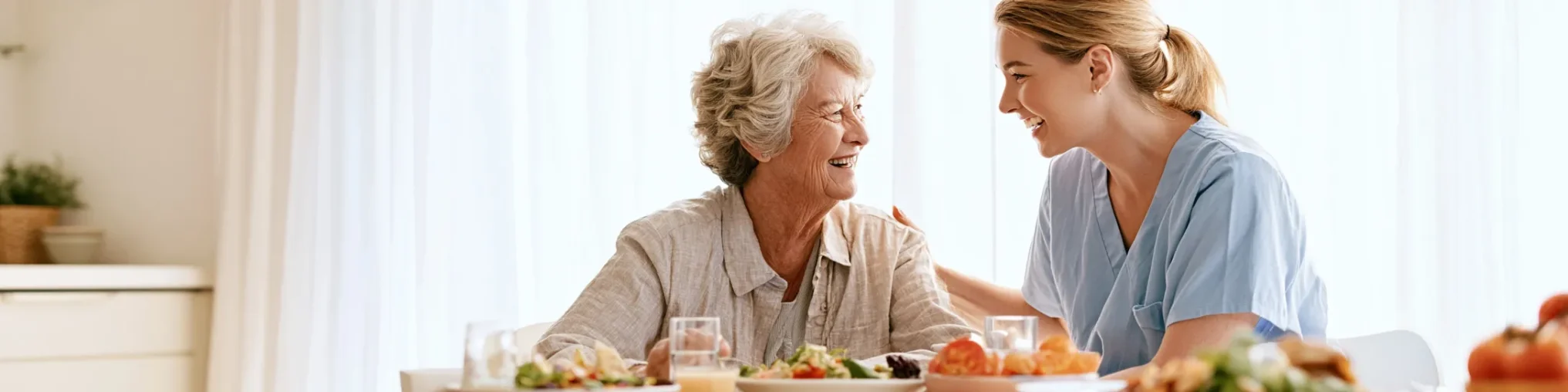
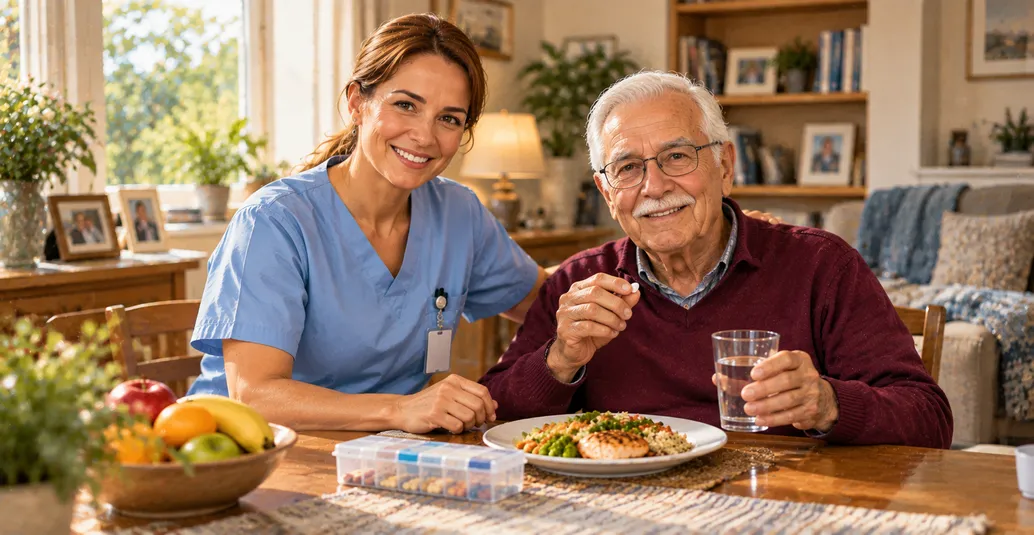
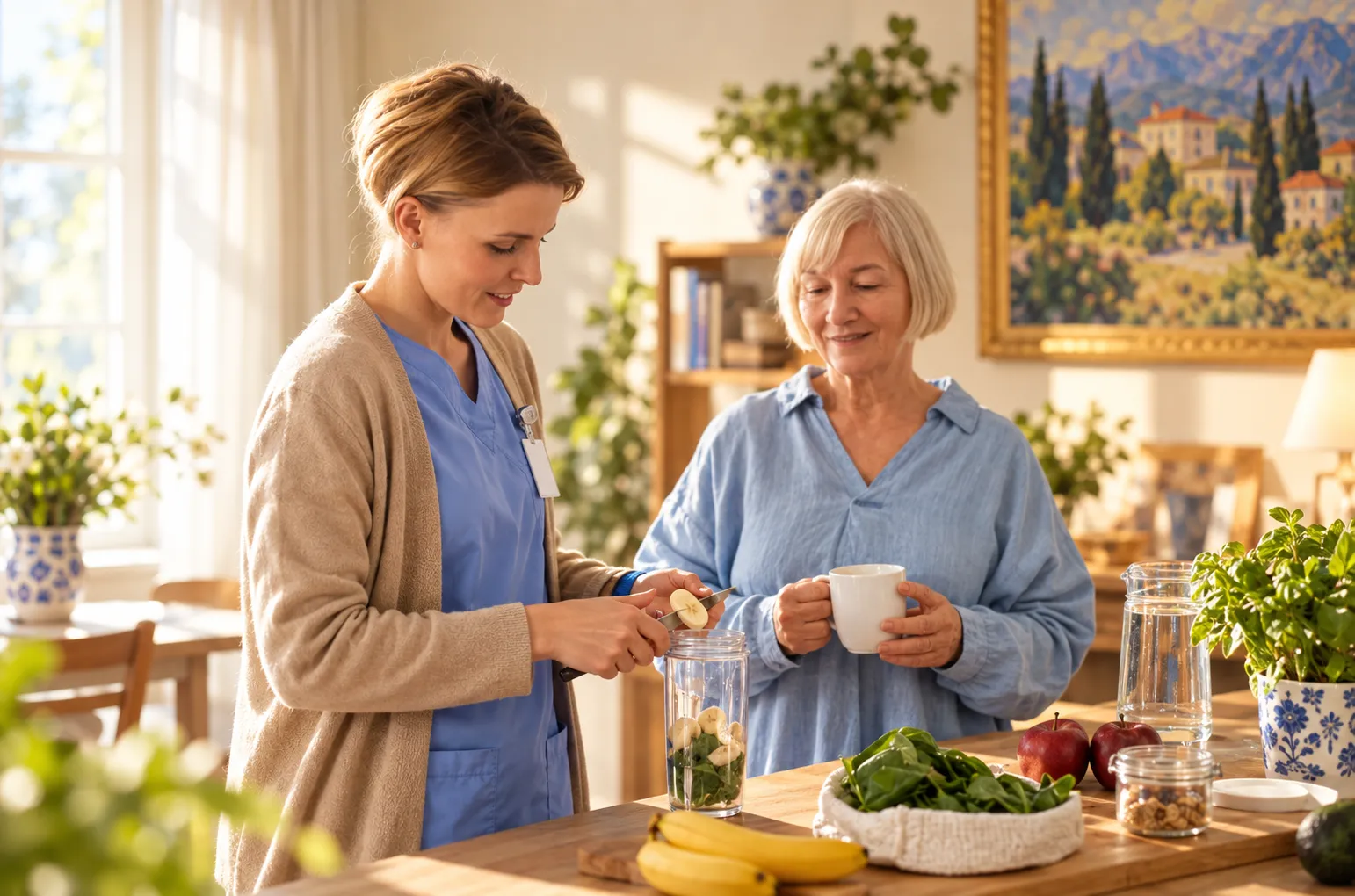
Grocery shopping, home-cooked meals, and company at the table, following any diet the doctor or family has set.
4.9 (250+ Reviews)


100% Client satisfaction
The freezer is full. There is soup you brought in March, a lasagne from the neighbour, and three meals from the delivery service the family signed up for. All of it untouched. When you ask, she says she ate earlier and was not very hungry.
Families usually arrive at this page looking for recipes. That is rarely the actual problem. The food exists. What has stopped is the eating, and no amount of better cooking fixes a table that nobody sits down at.
Meal preparation from Good Hands Home Care covers the whole chain from the shopping list to the plate — and the part that gets left out of every list: someone being there while the meal is eaten.

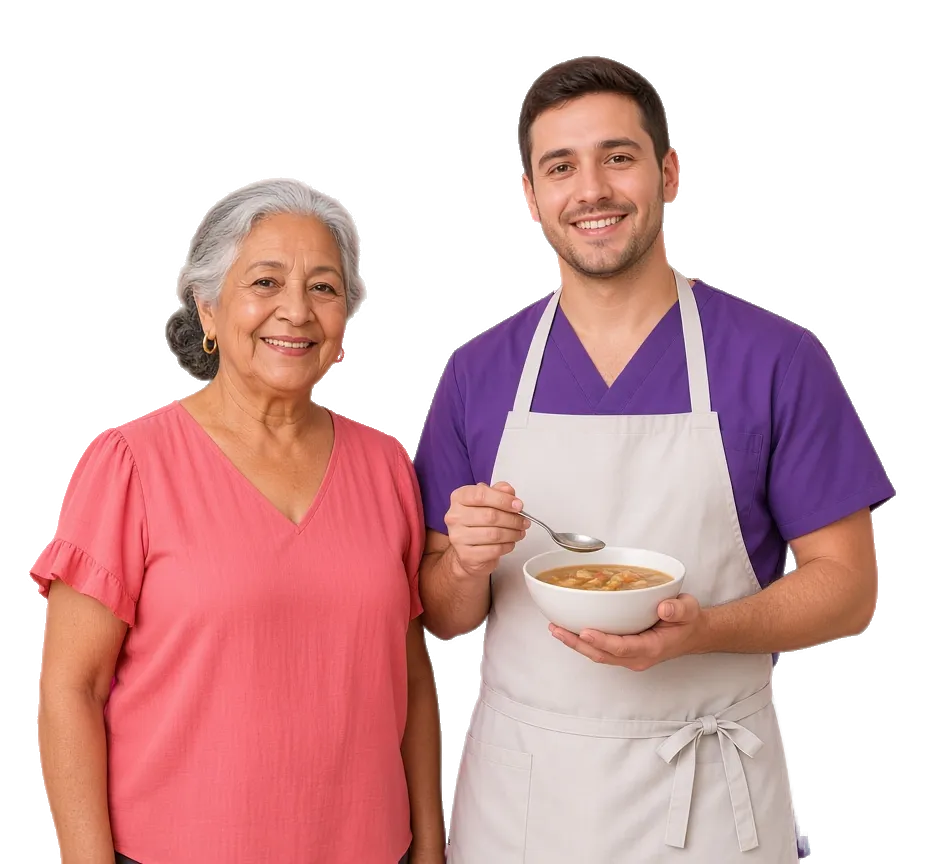
When you need care day and night, we're there!

From aging at home to recovery and long-term conditions, every family's situation is different. We listen first, then build care that fits.
Missed meals, forgotten medications, daily tasks becoming harder. A caregiver brings the right support — without taking away independence.


Healing at home shouldn't feel overwhelming. Hands-on help with mobility, routines, and daily care makes the return smoother for everyone.


Chronic illness or memory changes don't have to mean leaving home. Consistent in-home support keeps comfort, dignity, and connection close.


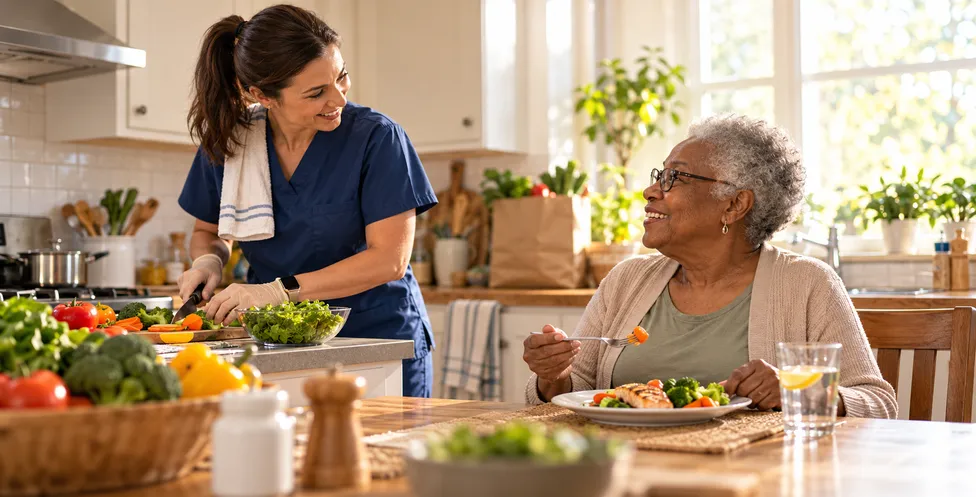
In home care, meal preparation means a caregiver planning, shopping for, cooking and serving meals in the person’s own kitchen, to whatever instructions their household has been given.
Planning & Shopping — groceries with the person or on their behalf, dates checked, staples kept in stock.
Cooking to Instructions — texture and consistency where swallowing is affected, restrictions for diabetes, kidney or heart conditions, allergies.
Serving & Company — meals scheduled to fall inside the visit, with the caregiver at the table while the meal is eaten.
Leftovers & Kitchen — food stored properly and labelled, washing up done, the kitchen kept in a state where cooking is not a chore before it starts.
Watching & Reporting — what was actually eaten, chewing that has become slow, appetite changes worth reporting to the family.
What a caregiver does not do is design a diet. Nutritional guidance is the work of a physician or a dietitian — caregivers carry out instructions rather than writing them.
Good Hands Home Care has served Pennsylvania families for more than eight years and holds accreditation from the Accreditation Commission for Health Care, alongside membership in the Pennsylvania Homecare Association.
Every one of our 120-plus caregivers clears a rigorous screening process before entering a client’s home, including a criminal background investigation and a psychological evaluation.
Who Benefits from Meal Preparation Support
Seniors for whom cooking got physically hard — standing, lifting, jars, small print.
People eating alone after decades of cooking for two.
Households with dietary instructions — swallowing, diabetes, kidney or heart conditions.
Families noticing unplanned weight loss who need somebody seeing the pattern weekly instead of at Christmas.
Caregivers are matched on temperament as well as on skills, which matters more here than it sounds. Somebody is going to be in your mother’s kitchen and at her table several times a week, and whether she looks forward to that decides how much of this works.

Our experienced team handles every detail—from the initial consultation to ongoing support—so your family can focus on what matters most.

You tell us what is actually being eaten and where the chain is breaking down. We confirm availability.
Our team visits the home, looks at the kitchen and what is in it, goes through any dietary instructions the household has, and settles the visit schedule and the quote.
We select a caregiver suited to the needs, the schedule and the personality involved — somebody your mother will look forward to seeing at her table.
Care begins under supervision, with the plan revised as things change and backup coverage arranged whenever a caregiver is unavailable.



630 Freedom Business Center Dr., 3rd Floor
King of Prussia, PA 19406
Phone Number: 610-285-1095
info@goodhandshomecarellc.com
Mon - Fri: 9AM to 5PM EST
Sat - Sun: On-Call Only
Families across Pennsylvania trust us with the care of the people they love most. Read real reviews from our clients, their families, and the caregivers who make our home health care possible.

Great home care agency. I highly recommend it.

Great service.
Great place to work. I highly recommend it.
Very professional and friendly home care agency. Great place to work. I would recommend this company.
We're proud to provide trusted in-home care across 14 Pennsylvania counties. Whether you're visiting our office or looking for a home nurse near you, our team is here to help every step of the way.
630 Freedom Business Center Dr., 3rd Floor
King of Prussia, PA 19406
Phone Number: 610-285-1095
info@goodhandshomecarellc.com
Mon - Fri: 9AM to 5PM EST
Sat - Sun: On-Call Only
Planning, shopping, cooking and serving meals in the person’s own kitchen to whatever instructions the household has been given, plus storing leftovers and clearing up afterwards. It also includes staying at the table while the meal is eaten, which is often the part that makes the difference.
Weight loss that nobody planned is worth raising with a doctor first, because the cause may be medication, dental problems, swallowing difficulty or something else entirely. Alongside that, the most common practical reason is eating alone, and a caregiver who cooks and then sits down at the table usually shifts how much gets eaten.
Yes, to instructions the household already has. That covers texture and consistency where swallowing is affected, restrictions relating to diabetes, kidney or heart conditions, and allergies. Designing a diet is the work of a physician or dietitian, so caregivers carry out instructions rather than writing them.
It depends on what has broken down. Delivery solves shopping and cooking, and it costs less than care hours. It does not tell you whether the meal was eaten, and it does not change eating alone. Where those are the problem, someone in the kitchen works better. Plenty of households run both.
Yes, either with the person or on their behalf. Going along is usually better where the person is up to it, because choosing your own food is worth more than the errand itself. Caregivers also check dates, clear out what has gone off and keep staples in stock.
Where the household wants it and the schedule allows, yes. Sitting at the table turns a meal back into an occasion, and the amount eaten generally goes up. It also means somebody notices when half the plate comes back or chewing has become slow.
Yes. Some households use a longer weekly visit for batch cooking, with meals portioned, labelled and stored, then shorter daily visits to heat and serve. It works well where the difficulty is cooking rather than eating, and it usually costs less than covering every meal with a full visit.
Medicare does not pay for meal preparation or other non-medical care at home. Some households qualify for community meal programmes through their county’s area agency on aging. Care hours are usually funded through private pay, long-term care insurance, VA benefits where the person is eligible, or Pennsylvania’s Medicaid programs where they qualify.



In home care, meal preparation means a caregiver planning, shopping for, cooking and serving meals in the person’s own kitchen, to whatever instructions their household has been given. It covers the whole chain from the shopping list to the plate, including the washing up.
It also covers the part that gets left out of every list: someone being there while the meal is eaten.
This almost never gets announced. Families notice it sideways, usually on a visit, and often months after it started.
Weight loss that nobody planned is worth mentioning to a doctor rather than solving with recipes, because the cause may not be about food at all. What a caregiver adds is somebody who sees the pattern weekly instead of at Christmas.
Almost none of the reasons are about willpower or fussiness, and knowing which one applies changes what actually helps.
Where a caregiver sits down and eats with the person, the amount eaten goes up. Not because the cooking is better, but because a meal becomes an occasion again rather than a task on a list.
This is the thing that separates a caregiver from a delivery box, and families are usually surprised by how much difference it makes. The conversation over lunch is doing as much work as the lunch itself.
It also changes what gets noticed. Somebody at the table sees that half the plate came back, that chewing has become slow, that the same food was pushed around for ten minutes. None of that is visible from a container left in the fridge.
Delivered meals solve a real problem, and plenty of households use them well. It is worth being clear about which problem they solve.
| What Meal Delivery Does Well | What It Does Not Solve |
|---|---|
| Removes shopping, cooking and washing up entirely | A meal still has to be heated, opened and eaten, which is where the chain usually breaks |
| Provides consistent portions on a predictable schedule | Nobody knows whether it was eaten or thrown away |
| Works for someone who is eating fine and simply cannot cook | Eating alone stays exactly as it was |
| Costs less than paying for care hours | Preferences drift, and a menu chosen in January stops appealing by March |
Plenty of households run both: delivery for the logistics, a caregiver for the meals where company matters most. That combination often costs less than covering every meal with care hours.
Meals depend on what is in the kitchen, and that is where a lot of households quietly fail.
Caregivers handle the shopping, either with the person or on their behalf. Going along is usually better where the person is up to it: choosing your own food is one of the last pieces of ordinary autonomy in a week, and the outing does more than the errand.
The rest of it is unglamorous. Checking dates and clearing what has gone off. Keeping staples in stock so a meal is always possible. Storing leftovers properly and labelling them so they get eaten rather than eyed suspiciously. Keeping the kitchen in a state where cooking is not a chore before it starts.
Where a household has dietary instructions, the caregiver cooks to them. That covers texture and consistency where swallowing is affected, restrictions relating to diabetes, kidney or heart conditions, allergies, and anything set out following a hospital stay.
What a caregiver does not do is design a diet. Nutritional guidance is the work of a physician or a dietitian, and anything on this page is about carrying out instructions rather than writing them. Where a household has no instructions and the family is worried about weight or nutrition, that is a conversation for the doctor first.
Beyond the instructions, the practical goal is straightforward: food the person actually wants to eat, at a temperature and texture that works, in portions that do not look like a challenge.
Meal preparation is part of the visit rather than a service booked on its own, and how it lands depends on the schedule.
A single daily visit usually covers the main meal, with something left ready for later. Two shorter visits cover breakfast and dinner, which suits households where mornings are the hard part. Some families use a longer weekly visit for batch cooking, then shorter daily visits to heat, serve and sit down.
Where the person eats better with company, meals get scheduled to fall inside the visit rather than left for afterwards. That single scheduling decision does more than most of the rest.
Meal preparation is not billed separately. It sits inside the hourly care visit, so the cost depends on how many visits a week the household needs and how long each one runs. Food and shopping are paid for by the household.
What moves the hourly rate is the level of support required, the number of hours booked, and whether coverage falls on weekdays, weekends, evenings or overnight.
The rate covers the caregiver’s time, the supervision behind them, the written care plan and backup coverage. There is no separate charge for the assessment visit or for building the plan.
Medicare does not pay for meal preparation or other non-medical care at home. Some households qualify for community meal programmes run through their county’s area agency on aging, which work alongside care hours rather than replacing them. Families commonly fund daily support through private pay, long-term care insurance, VA benefits where the person is eligible, or Pennsylvania’s Medicaid Waiver and Community HealthChoices programs where they qualify.
To get an exact figure, schedule the free in-home assessment. You will leave that visit with a written scope and a rate, with no obligation attached.
Meals are part of a wider visit, and they usually come up alongside one of these.